



January 21, 2026
The New Generation Reality: Why Solar Alone Falls Short – and Why System Thinking Matters
ca.
4
Minuten Lesezeit
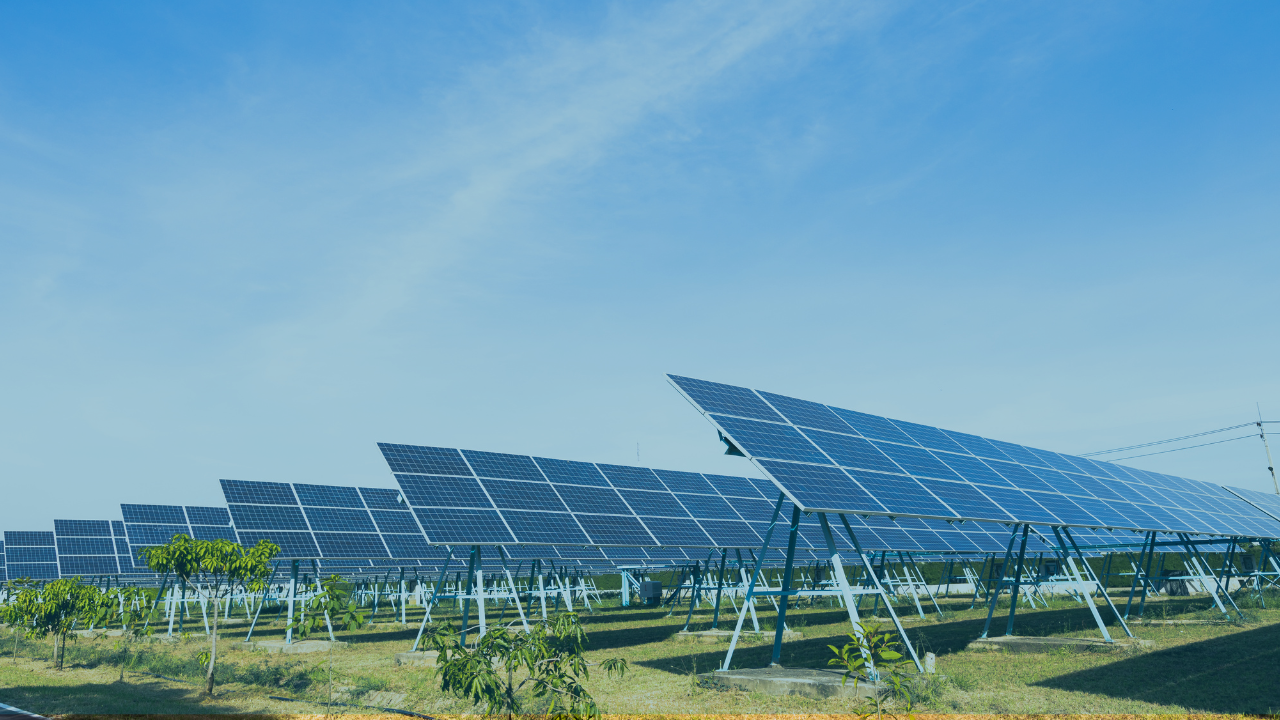
But That Doesn’t Automatically Mean Lower Energy Costs
Solar has never been as affordable as it is today in Germany.
Modules cost next to nothing, installations are faster than ever, and battery storage is booming.
As a result, many companies think:
“Let’s install solar – and our energy costs will automatically go down.”
Unfortunately, it’s not that simple.
Solar is an excellent building block.
But profitability doesn’t happen in the panel.
It happens in the system.
This became very clear again in the latest Energiezone episode discussing Enpal and the solar market:
installation issues, opaque leasing models, and the same recurring question:
Does this actually pay off?
The honest answer:
Only the interaction of procurement, PV, storage, grid charges, and flexibility determines real profitability.
1. Solar Without a System Often Leads to False Expectations
A panel produces electricity.
But it does not automatically optimize costs.
Common misconceptions in the market:
- “More PV equals more savings”
- “A battery solves the winter problem”
- “Self-consumption always pays off”
- “Dynamic tariffs + PV + storage = guaranteed lower costs”
Reality is more complex:
- Winter profiles significantly reduce yields
- Grid charges often account for over 30% of total costs
- Feed-in revenues are barely profitable
- Without control, batteries charge and discharge at the wrong times
- Many optimizations simply don’t make economic sense
Solar can reduce costs –
but only if it becomes part of an integrated system.
2. The Real Strength of Solar Lies in Its Interaction with Market Prices
Market prices change every 15 minutes.
They can turn negative or spike sharply – price swings of €96/MWh within 15 minutes are reality.
Solar creates real value when it:
- avoids peak loads
- reacts to price signals
- charges and discharges storage intelligently
- minimizes feed-in
- delivers energy at the right moment
Solar is a generation module.
System thinking turns it into an optimization module.
3. Without System Thinking, Mis-Investments Are Inevitable
Many companies are currently investing in:
- PV systems that are too large
- storage systems that are too small – or too big
- leasing models that never amortize
- unsuitable tariff structures
- missing energy control
The reason is always the same:
There is no integrated model that connects all relevant factors.
A battery without a price strategy is idle capital.
A PV system without load analysis wastes potential.
A tariff without control is pure chance.
The system decides – not the device.
4. System Thinking Reduces Power Costs Before Anything Is Built
Instead of “hardware first”, companies need a
“system first” approach.
A systemic perspective answers questions like:
- How do PV, storage, and load profiles interact?
- How do grid charges affect profitability?
- What system size actually makes sense?
- When does storage pay off – and when doesn’t it?
- How much flexibility can the company unlock?
- Which price signals can realistically be used?
Before investing €500,000 in a solar system,
companies should invest two hours in system thinking.
5. How onu.energy Turns Solar into an Economically Integrated System
This is exactly where onu.energy comes in.
We integrate all relevant elements into a single model:
- Forward and spot market prices
to determine when solar actually saves money - PV generation forecasts
to calculate optimal storage strategies - Grid charges (including §14a, regional effects, future changes)
because they often have more impact than PV itself - Load profiles
to avoid overestimating self-consumption - Flexibility metrics
to quantify real savings potential
The result is a complete energy system model that shows:
- the economically optimal PV size
- whether storage makes sense – and how large it should be
- how the system should be integrated into the market
- how much the company can realistically save
- which risks are eliminated
Solar is no longer just installed.
It becomes economically embedded.
6. Conclusion: The Future Belongs to Systems – Not Individual Components
Solar is a powerful building block.
But without system thinking, companies give away 20–40% of their potential.
We believe: Profitability is not decided by the panel but by the system behind it.
That is exactly the system onu.energy builds.
